

What it does require is intention: knowing what to capture, how to capture it, and what to do with it once you have it. Here's everything you need to start.
- Why Video Outperforms Everything Else Right Now
Meta's own data shows that video content generates three times more engagement than static images across Facebook and Instagram. On Google Business Profiles, listings with video receive significantly more views and clicks than those without.
The reason isn't complicated. Video does something a photo can't: it puts a viewer inside a moment. A fifteen-second clip of a full dining room on a Friday night communicates energy, atmosphere, and demand in a way that no caption or image can replicate.
For restaurants and lodging properties, where the experience is the product, that capability is enormously valuable.
- What Actually Performs Well
Not all video performs equally. Here's what works for hospitality brands:
- Food and drink in motion: the pour, the flame, the steam rising from a dish, a sauce finished tableside. The preparation moment is almost always more compelling than the plated result.
- The dining room at peak: a full house, a busy bar, people mid-conversation. This signals demand in a way that an empty room never will.
- Behind the scenes in the kitchen: prep work, the pass during a busy service, a chef explaining an ingredient or technique. These humanize the experience and build trust.
- Staff moments: a bartender mid-pour, a server describing a dish with real enthusiasm, a team having a pre-shift laugh. People follow people, not brands.
- Property and setting for lodging operators: sunrise over a patio, a fireplace being lit, a quiet corner of a garden. These sell the feeling of being there.
Notice what's not on that list: promotional graphics, text-heavy announcements, anything that looks like an ad. Those formats perform worst because they feel like interruptions rather than experiences.
- The Equipment You Actually Need
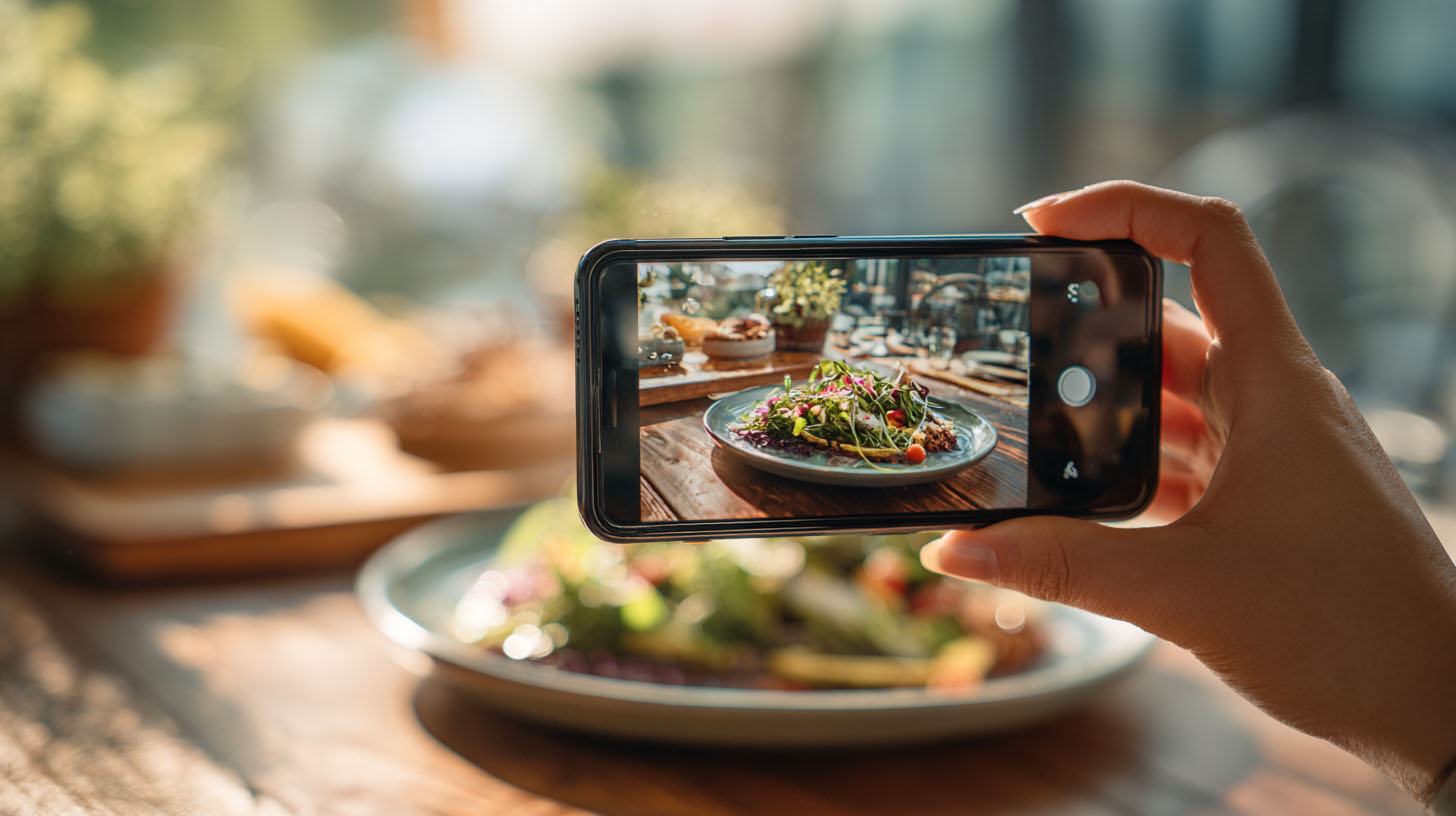
A current iPhone or Android phone shoots video that would have required a professional camera five years ago. If you have a phone made in the last three years, you have everything you need to start.
Two optional additions worth having:
- A small tripod or phone mount: removes camera shake and frees both hands. A basic model costs under $20 and is worth every penny.
- A clip-on microphone: for any video where you want to hear someone talking, a small wireless mic improves audio quality dramatically. The most common complaint about phone video isn't the image, it's the sound.
That's it. Don't let gear become the reason you don't start.
- Lighting: The Difference Between Good and Great
The biggest quality gap between amateur and professional video isn't the camera. It's the light.
Natural light is your best option. Shoot near windows during the day whenever possible. The quality of window light in the right restaurant at the right time of day is beautiful and costs nothing.
In the evening, warm overhead lighting aimed at your subject works well. What doesn't work is shooting against a bright background, which silhouettes your subject, or in a dark corner with a single overhead light that creates harsh shadows.
Before you press record, take five seconds to look at where the light is coming from and whether it's flattering your subject. That one habit will immediately improve everything you shoot.
- How Long Your Videos Should Be
Short. Shorter than you think.
On Instagram Reels and TikTok, videos between seven and fifteen seconds consistently outperform longer content. On Facebook, thirty to sixty seconds is the sweet spot. For your Google Business Profile, anything under two minutes works fine.
The discipline of keeping video short forces you to lead with the best moment instead of building to it. If a clip is compelling in the first two seconds, people watch. If it isn't, they scroll, and you've lost them regardless of how good the rest was.
Edit out everything that doesn't earn its place. What's left is almost always better.
- Building a Simple Capture Habit
The operators who use video consistently don't think of it as a project. They've built small capture habits into how they run service.
That might look like one team member designated to grab three clips during Friday dinner service. Or a standing rule that any time a dish goes out that looks exceptional, someone films it leaving the pass. Or a five-minute walk around the property on a nice morning to capture the light and the setting.
The goal is to always have footage to work with. Editing and posting are easy once you have material. The bottleneck is always having footage to work with. Editing and posting take minutes once you have material. Actually capturing it is the hard part.
- Where to Post and How Often
For most restaurant and lodging operators, focus on two platforms and do them consistently rather than spreading thin across five:
- Instagram Reels: highest organic reach of any content format on the platform right now. Two to three times per week during busy season is a strong cadence.
- Google Business Profile: adding even one short video per month improves how your listing performs in local search. This is the most underused placement in hospitality.
Facebook video is worth doing if your audience skews slightly older, which it often does for lodging properties. TikTok is worth testing if you have someone on your team who is already comfortable there.
Two videos a week posted every week outperforms five videos one week and nothing the next. Consistency is the strategy.
- What to Do With Footage You Already Have
Most operators have more video than they realize. Check your phone's camera roll, ask your staff to check theirs, and look at what guests have already tagged. Candid moments from past services, events, or seasons can be repurposed and reposted, especially if the original content is more than a few months old.
A clip from last summer's patio opening, a video of a popular dish being made, or a team moment from a holiday service can all find a new audience with a fresh caption and a relevant posting moment. Don't let good footage sit unused because it isn't brand new.
- Ready to Make Video a Regular Part of Your Marketing?
If you want help figuring out what to capture and how to make it a habit, book a free call. We’ll look at your specific situation and build from there.